
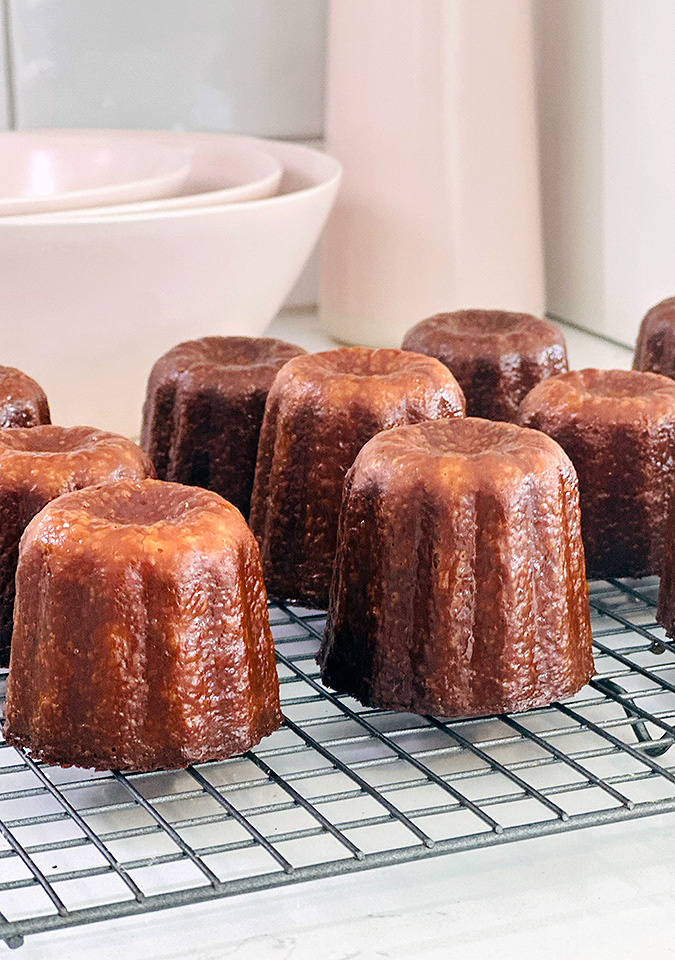
I walked into a tiny Montreal coffee shop, nine years ago, for a cup of coffee. There they were—these ridged little bronze beauties called Canelés de Bordeaux. I had no idea what they were but they looked intriguing. One bite and I was completely hooked. The caramelized shell crackled perfectly. The custardy center practically melted on my tongue. I thought about them for years afterward. Then this fall, Paris happened. I found them again in a patisserie window, gleaming under the lights. My heart actually skipped. Some foods just stick with you like that. They become part of your story. Canelés are definitely part of mine.

These little gems require special fluted copper molds, traditionally coated with beeswax and butter. The wax creates that insanely dark, caramelized crust that makes canelés so addictive.
Let’s be real—melting beeswax in your kitchen isn’t exactly practical. I searched everywhere for an easier solution.
Then I found a non-stick canelé pan and everything changed. No wax needed, just a light greasing and you’re good to go. Sure, copper purists might judge me a little. But I’m making canelés at home now, which feels like actual magic. The non-stick pans work beautifully. Sometimes the shortcut is absolutely worth taking.

The batter needs to rest in the fridge for at least 24 hours. I know, waiting is torture when you’re excited to bake. But this rest is absolutely essential for proper texture. The flour fully hydrates during that time. The flavors deepen and meld together beautifully. I let it go 48 hours for even better results. Trust me, skipping this step ruins everything. The patience pays off with that perfect custardy interior. Make the batter today, bake tomorrow or the next.

Canelés come from Bordeaux, France, dating back centuries. Nuns supposedly created them using leftover egg yolks from wine-making. The copper molds and beeswax coating became traditional. They nearly disappeared but experienced a major revival in the 1980s. Now they’re beloved worldwide as a French pastry icon.

Here’s the beautiful truth about canelés—they’re shockingly simple once you know the tricks.
Mix everything in your stand mixer, let it rest, then bake. That’s genuinely it.
The hardest part is waiting those 24 hours for the batter to rest. But active work time? Maybe 15 minutes total. Your mixer does the heavy lifting while you do literally anything else. The non-stick pans eliminate the fussiest traditional step entirely. No tempering beeswax or worrying about proper coating techniques. Just grease, fill, and bake until they’re deeply caramelized. You’ll feel like a pastry chef pulling these beauties from your oven.
They look intimidating but they’re honestly beginner-friendly.
If you make these, I’d love to hear how they turn out. Sign up for new recipes so you never miss what’s baking next. Drop a comment below with your results and any questions. Share this with anyone who needs these crispy-custardy wonders in their life. Let’s make canelés happen in home kitchens everywhere.
Thanks for reading.
Make the batter (day before): Bake the canelés: The Love: The long refrigeration develops flavor and texture. It is absolutely essential!
Ingredients
Instructions
Notes
